
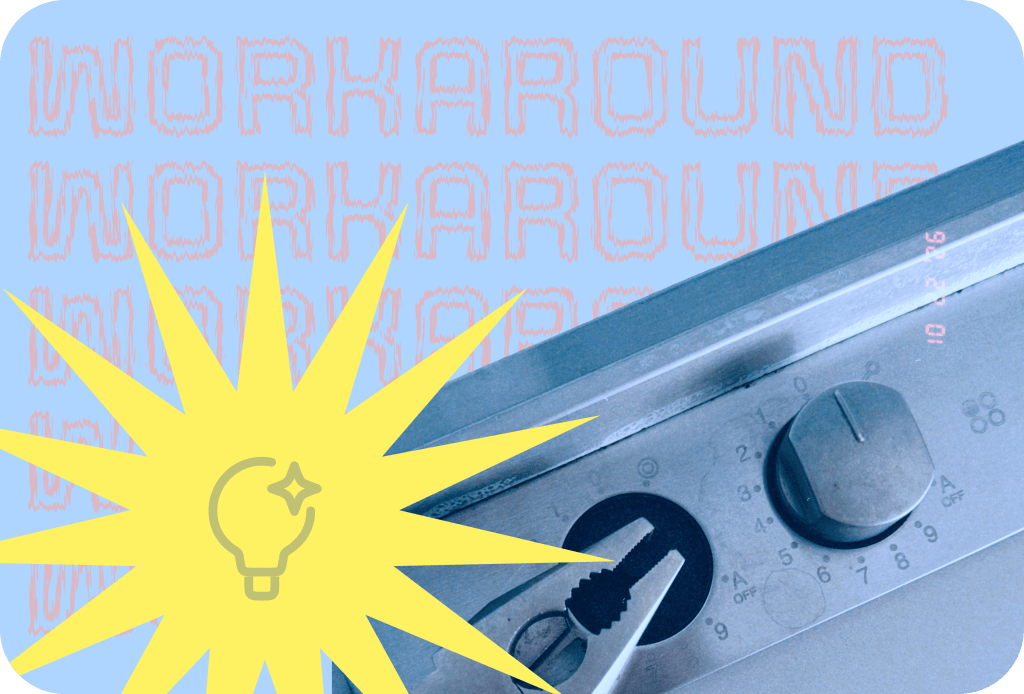
Workarounds are part of our everyday life. They’re unexpected solutions to problems, temporary fixes that sometimes stay with us forever. They may be a chair we use instead of a hanger, a box of cookies used as a sewing-kit container, or a pair of pliers we use instead of a handle. People always try to make their lives easier; we are creative creatures and don’t like to wait for someone else to solve our problems.
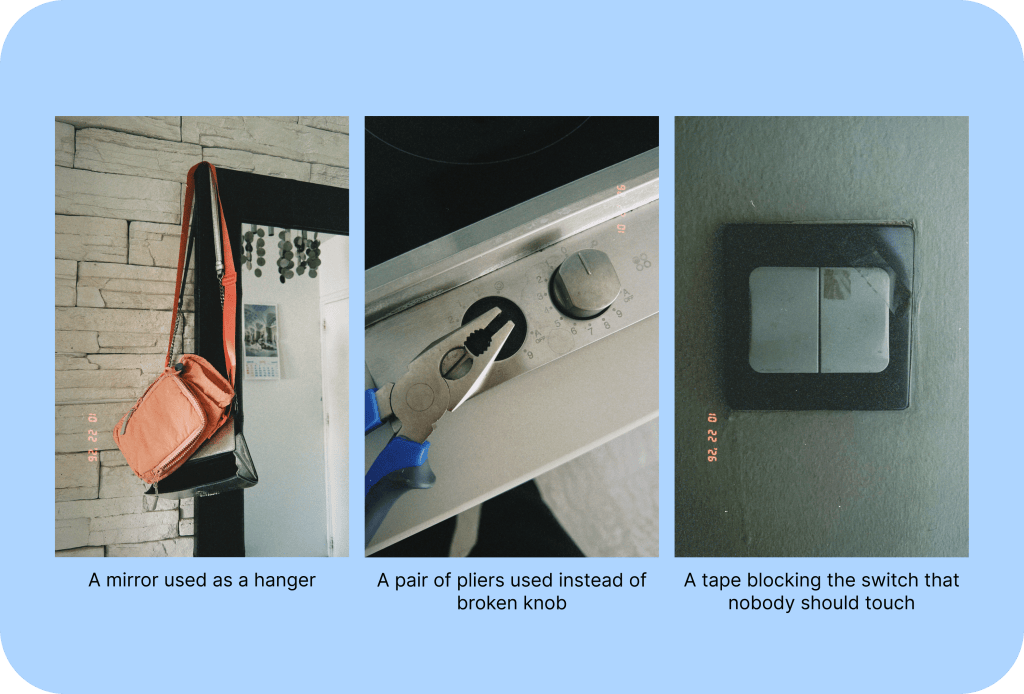
I personally have some of these workarounds in my house. Since I live in a very old apartment, things sometimes break or don’t work as expected. For example, there are no clothes hangers at my front door. My mirror serves as an improvised hanger for my small bags.
A knob on my stove broke, so I sometimes use pliers to turn it on or off because I’m too shy to complain to my landlord. It works, so I’m doing fine.
A mysterious switch in one room turns on a roof light. So, I put tape on it to prevent my guests from turning the light on by mistake. In each case, I tried to fix the existing problem with what I had.
All photographs in this post were taken by the author
For the mirror, I tried to compensate for the lack of a hanger and avoid cluttering the surfaces. Since the mirror is big enough to hang something, I thought it would be better to use it as a hanger, since it doesn’t break the object’s main function. I created this solution because I lacked a certain object, so I temporarily found the function I needed in another object. It teaches us that some things may not be used as expected, and that’s fine as long as they serve your needs. On the other hand, such solutions may signal that a space, project, or infrastructure needs changes.
When a knob on my stove got broken, a pair of pliers was a real temporary fix to something that was no longer functioning the way it should. The metal in the knob was too fragile and broke, so this was the only solution that let me cook, since I haven’t fixed it yet. In this case, the workaround was a temporary fix for a malfunction caused by an imperfect design. This signals that no system or design is perfect. Sometimes elements break, and you may find an unexpected solution to keep the product working.
Another interesting workaround I have at home is a piece of tape I put on a light switch. Imagine you have a switch that lights the roof, but you don’t even have access to this roof! If someone leaves it on by mistake, getting an electricity bill a month later won’t be pleasant. The solution was simple: put on tape that alerts anyone who enters the room that something is wrong with the switch. Also, tape can physically block someone from pressing the button. Sometimes it even reminds me.
What I find interesting here is that the tape became a way to communicate the problem to others without words or text. The proper solution would be to replace the building’s entire electrical infrastructure. The tape solution was affordable, fast, and accessible. The imperfect system may cause problems; to avoid them, we may find a workaround instead of replacing the whole infrastructure.
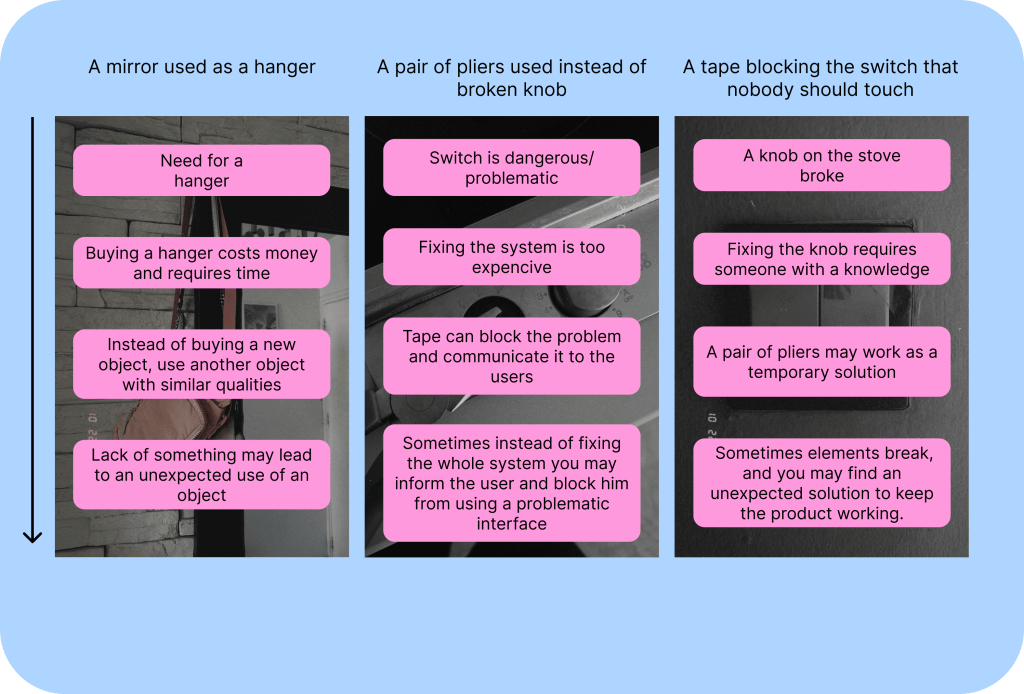
Analyzing workarounds benefits not only designers. They can help us see flaws in existing systems that may need fixing. They teach us that the solution isn’t always visible or perfectly planned. A small flaw, break, or malfunction fixed with a workaround answers a question: how can I make the system work without breaking it?


Leave a Reply